We Don't Do Baskets
On building a family culture that's actually yours

After a workout class last week, a few of us were commiserating. Spring break meant no school after a winter of a million snow days. And, for many, the week also promised Passover plans, egg hunts, and Easter baskets.
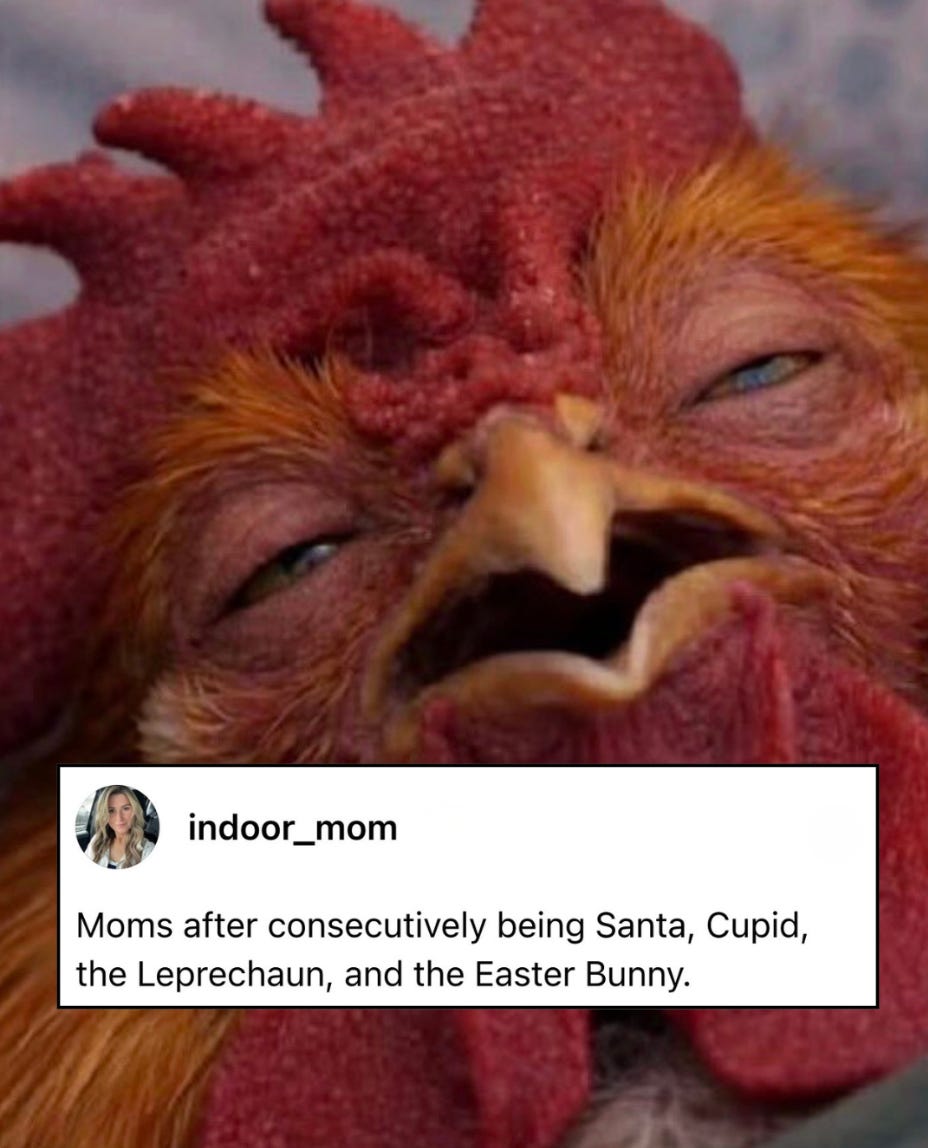
I was right there with them until one of the women said, almost to herself: “And now I have to go buy toys and candy that’s just going to make my kids go insane?”
She didn’t sound excited. She sounded… obligated. Like the decision had already been made years ago, and now she was just carrying it out.
Because that’s the thing about traditions: they rarely feel optional. They arrive as invitations and harden into expectations. You do the baskets because you’ve always done the baskets. You plan the brunch because that’s what families do. You say yes because your parents expect it, Instagram expects it, the culture expects it.
And to be clear—sometimes that’s lovely. Sometimes those rituals are the point. They anchor us to the past, and to those who came before us. But sometimes… they just become more work. More stuff. More sugar. More logistics. More invisible labor—usually falling to one person (spoiler: THE MOM)—performed in the name of “magic.”
What struck me about that moment wasn’t that my friend didn’t like Easter. It was that she didn’t feel like she could opt out of doing it that way.
Which got me thinking: How many of the things we call “tradition” are actually choices we’ve stopped realizing we’re allowed to make?
For context, I am not a traditionalist. Not even a little.
Every personality test I’ve ever taken puts me somewhere around a 5 out of 100 in that category, a number that a business coach once greeted with visible shock: “I’ve never seen a score this low!”
Beyond that, my background doesn’t exactly predispose me to a tidy relationship with holidays. My mother is Jewish, my father Episcopalian—I was raised going to church, but spent enough time with my grandparents and cousins on the Jewish side to feel genuinely connected to that culture too. More broadly, I don’t tend to do things because they’ve always been done that way. I do them because they feel right—or fun—or like they’ll make a good story. Preferably all three. My husband is very similar (we eloped before telling anyone we were engaged, which probably tells you everything you need to know).
Having kids has complicated that, of course. Suddenly the question isn’t just what do we want to do? It’s what do we want to create for them? And, just beneath that: Are we choosing this? Or are we just inheriting it?
Take the Elf on the Shelf.
We have a strict no-Elf policy. First: I don’t love the surveillance aspect. The Elf is Santa’s mole in your home? Eh, I’ve never liked tattletales. Rat culture gets a hard no from me. Second: I would be the one moving it every night, and I have ADHD. It’s a disaster waiting to happen. And third: it’s not even a tradition we grew up with. The Elf is a relatively new addition to our country’s capitalist fever dream of holiday lore. There’s no history we’re honoring.
If one of my kids desperately wants an Elf someday, we’ll revisit. But I’m not importing a new obligation into our lives out of a vague sense that it’s what families are supposed to do.
It gets more interesting when the stakes are higher.
This February, I turned 40. My mom reached out, wanting to plan something—a dinner with family and friends, something that felt appropriately significant. My daughter, Bella, was also very invested in the idea of celebrating.
I love them. I love honoring other people. But the truth was: I didn’t want it.
I already had a plan—to go away for one night with Ethan, relax at a spa, be quiet, and not be responsible for anyone. That felt like heaven. It felt like what I actually needed. I told my mom I’d think about it. And while I did, I realized that if I said yes to the dinner, I would be doing it entirely for other people.
So I didn’t.
Instead, I said: come over a few nights before. We’ll order takeout and keep it simple. I set the boundary with kindness and love. And it was okay. The milestone still happened. Bella helped me blow out my candles. It just looked a little different than the default version.
And then there are the holidays—the ones that come with a full ecosystem of expectations.
This past week was a perfect example: Passover, Easter, spring break, all colliding at once.
Earlier in the week, we went to my aunt’s Passover dinner. A full table, extended family, second cousins, partners, kids weaving in and out—busy, but somehow still intentional. It mattered to my family. So we showed up. And we had fun. The kids absorbed some history, hunted for matzah, and we leaned into the chaos.
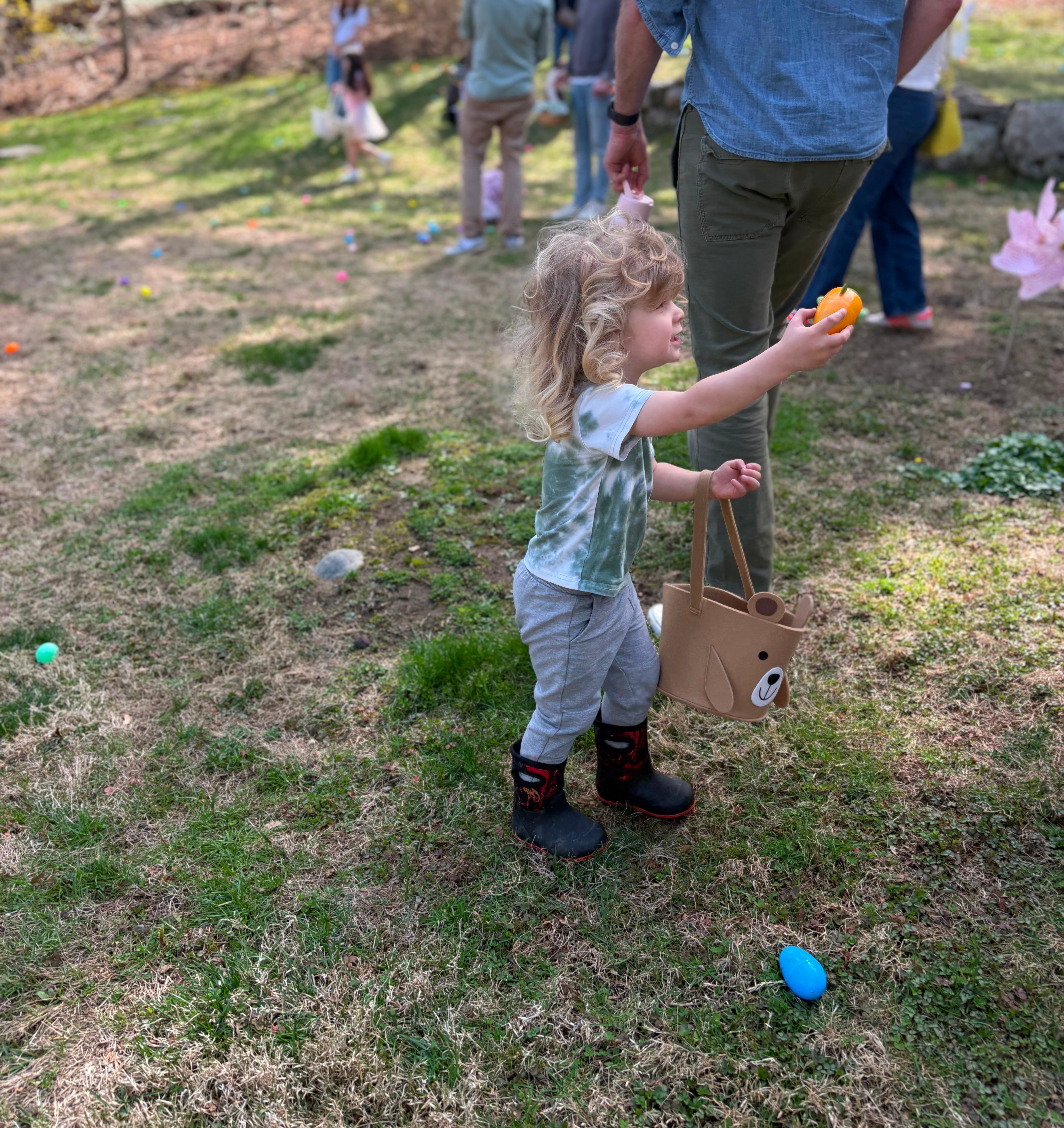
A few days later, we were invited to an egg hunt hosted by preschool friends, complete with well-organized crafts, hundreds of plastic eggs, and an impressive snack and bagel spread. We saw a lot of our pals in town, it was one of those perfect early spring days, and we were in and out in under two hours. Ideal.
And on Easter Sunday?
We did basically nothing. No baskets from us. No special brunch. No religious obligations.
We stayed in our pajamas all day. My in-laws spent quality time with us before heading back to Vermont, getting in their holiday fix by hiding eggs and gifting new books. The kids played. We baked banana bread. There was music, dance parties, and a little bit of leftover candy.
It was easy and fun. And it felt like ours.
I want to be 100% clear: I have real admiration for the families who love this stuff. The matching outfits, the beautifully set tables, the fully realized holidays. Part of me is in awe. I also have people in my life who genuinely enjoy creating those moments. Planning and effort that’s given freely, without resentment. That kind of joy is contagious. This isn’t about rejecting that.
It’s about noticing when you’re trying to replicate it… without actually wanting to.
I think a lot of people are operating under an invisible pressure—to create magic, to make things special, to give our kids the kind of childhood they’ll remember. But kids don’t remember perfection. They remember how things felt.
It turns out, a calm house, an unhurried day, a parent who isn’t buried in logistics—that has its own kind of magic.
What if a family tradition is just something you repeat on purpose?
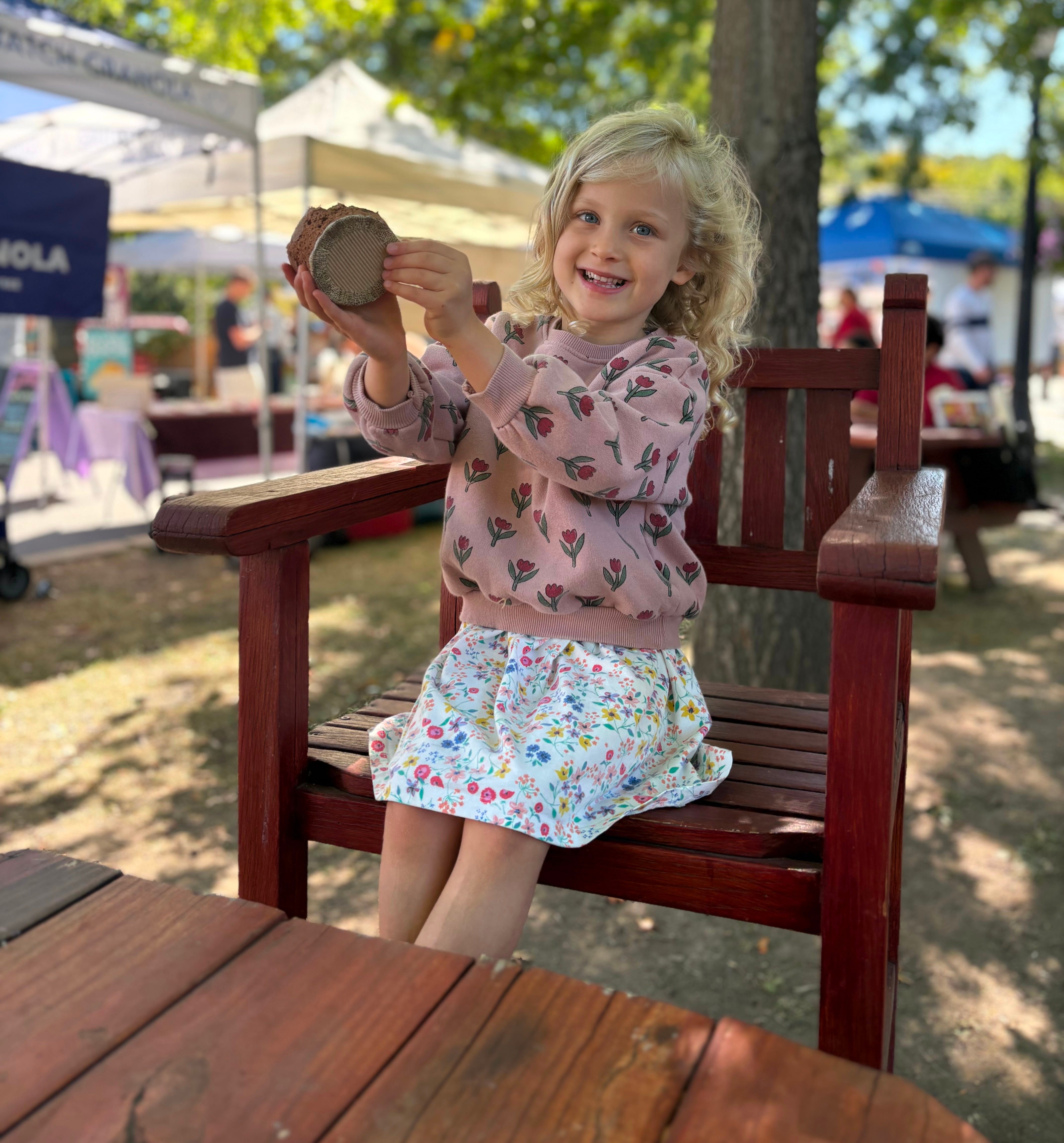
Charging crystals with your witchy mom under the full moon. Listening to the same reggae song in the car with your dad. Going to the diner with your grandparents every Friday for lunch. Wandering the farmers market on Saturdays, devouring a $10 muffin while a folk band plays in the background.
Maybe the question isn’t: What traditions should we be keeping? Maybe it’s: Which ones actually feel like us? And maybe just as important: Can we let other people do it differently—without assuming they’re getting it wrong?
Because there isn’t one version of a “good” childhood. There isn’t one version of a “good” family.
There are just the ones we build, on purpose.